Docking conveyor belts
Joining of conveyor belts
TD IRBIS LLC offers you the service of joining conveyor belts with polyvinyl chloride (PVC) and polyurethane (PU) covers directly at your enterprise, with specialists traveling to carry out the work. This service means the conveyor does not have to be dismantled to replace the belt. The work is done using the high-tech AERO press from the Dutch company Flexco.
Belts up to 1500 mm wide can be joined
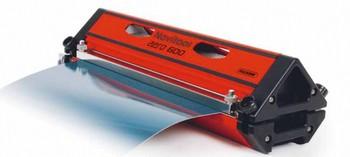
Joining belts with a press
PVC and PU conveyor belts are joined by hot vulcanization with a press, without adhesive mixtures, which achieves a joint strength of about 90% of the strength of the belt itself. The whole belt joining cycle is carried out at the production facilities of TD IRBIS LLC.
Joining belts with mechanical fasteners
Fasteners are screwed or riveted to the ends of the belt. The type of fasteners depends on the belt thickness. This method makes it easy to fit and remove the belt on the conveyor. Any type of belt can be joined this way. The maximum width of a belt with mechanical fasteners is not limited. Belts from warehouse stock are produced in 2-3 days.
Joining methods
Hot vulcanization
Advantages:
- The strongest method. If all technologies are observed, the joint strength is guaranteed up to 90% of the strength of the belt being joined;
- Quick commissioning of the joined belt. The belt can be started immediately after joining;
- Joining is possible in difficult environments (dust, sub-zero temperatures);
- The transported material cannot spill through the seam.
Disadvantages:
- The most expensive method of joining belts.
Cold vulcanization
Advantages:
- Cheaper than hot vulcanization;
- If all technologies are observed, the joint strength is guaranteed up to 70% of the strength of the belt being joined.
Disadvantages:
- Belt operation is limited to temperatures from -45 to +80 °C;
- Joining a belt well in this way requires special environmental conditions: suitable temperature, humidity and absence of dust.
Mechanical joining
Advantages:
- Speed of joining. The fastest method;
- Joining is possible in difficult environments (dust, sub-zero temperatures);
- Joining can be done by your own staff. No special skills or complex equipment are needed.
Disadvantages
- The transported material may spill through the seam;
- The shortest service life because the fasteners wear;
- Increased wear of rollers and drums.