Diagnostic services
All enterprises strive for stable, trouble-free operation of their production systems. Diagnostics of the technical condition of equipment is a step that helps prevent breakdowns and malfunctions. TD IRBIS LLC offers comprehensive diagnostics of industrial equipment so that you can ensure maximum efficiency and reliability of your production systems.
What diagnostic work includes
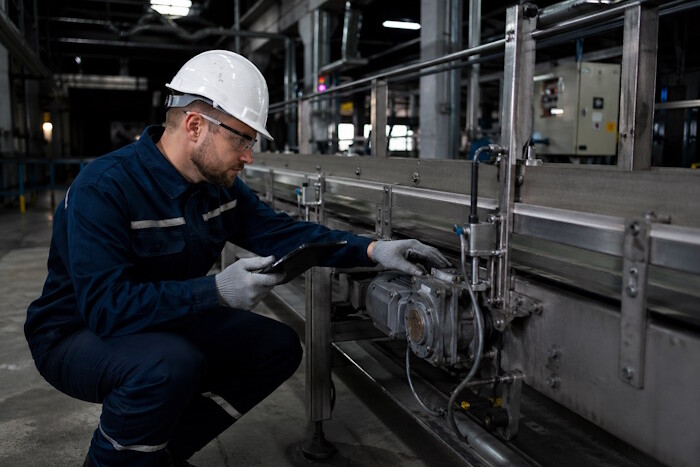
Diagnostics of the technical condition of equipment covers a comprehensive assessment of all the important elements and systems that affect the efficiency and reliability of your production process. It uses modern technologies to detect possible faults and prevent equipment malfunctions.
The key stages of diagnostics are:
- General inspection of the technical condition of equipment. The first stage is a comprehensive check of all the main mechanisms and systems. It makes it possible to detect any deviation from normal operation and collect the data needed for further analysis. Parameters such as vibration, temperature and load are measured, which allows potential problems to be identified at an early stage.
- Analysis of the condition of critical elements and systems. Special attention is paid to the most vulnerable and critical elements of equipment, in particular bearings, gearboxes, couplings, belts and other components of drive systems. Special diagnostic methods are used to check them, which make it possible to determine precisely the causes of wear or incorrect operation.
- Assessment of the efficiency of lubrication and cooling systems. An important aspect is checking the lubrication and cooling systems, which prevent overheating and wear of equipment parts. The efficiency of these systems is analyzed to identify possible problems that could lead to lower productivity and malfunctions.
Equipment diagnostic services
- Vibration diagnostics of bearings and bearing units. We use modern vibration analyzers to monitor the condition of bearing units, which makes it possible to determine precisely whether there are vibration defects and to prevent premature wear of components.
- Dynamic balancing of rotating units. We ensure optimal operation of rotating units through dynamic balancing, which reduces the load on other parts of the equipment and extends its service life.
- Defect detection in drive system elements: gearboxes, bearing units and couplings. We inspect gearboxes and other critical units to identify defects that could affect the efficiency and reliability of the equipment and, where needed, identify spare parts for the subsequent selection of solutions.
- Diagnostics of the causes of wear, overheating, noise and vibration of bearings and bearing units. We carry out a comprehensive analysis to determine the causes that contribute to wear of elements, overheating and noise, which may indicate potential problems in the operation of mechanisms.
- Diagnostics of conveyors and bucket elevators. We assess the technical condition of conveyors and bucket elevators to determine their efficiency and avoid malfunctions in conveyor systems.
- Analysis of sealing systems. We identify problems in the operation of sealing systems that can lead to leaks or lower equipment efficiency.
- Analysis of the efficiency of filtration systems. We assess the operation of filtration systems to ensure they work effectively and to prevent possible problems during equipment operation.
- Diagnostics of belt drive faults. We carry out a comprehensive check of belt drives, including analysis of belt wear, checking tension and pulley alignment, and assessing the condition of their working surfaces. This makes it possible to find the causes of premature wear, improve drive efficiency and reduce the risk of equipment downtime.
Stages of ordering equipment diagnostics
- Preliminary consultation. At the initial stage we hold a consultation to determine the customer's main problems and needs and to agree the scope of work.
- Carrying out diagnostics. After the technical specification is approved, our specialists carry out the equipment diagnostics directly on site.
- Report and recommendations. After the diagnostics we provide a detailed report with the results of the analysis, as well as recommendations for further action.
Why order equipment diagnostics from IRBIS
- Professional engineers with many years of experience. Our specialists have deep experience in various industries, which allows us to solve complex technical problems effectively.
- An individual approach to every client. We take into account the specifics of your enterprise and the specific equipment in order to offer optimal solutions.
- Use of modern diagnostic methods. For accurate analysis and determination of the causes of faults we use innovative diagnostic technologies and methods.
- Maximum efficiency and safety. Our diagnostic work helps you not only identify potential problems but also optimize equipment operation to reduce the risk of accidents and malfunctions.
Equipment and production systems that can be diagnosed
Technical diagnostics covers a wide range of equipment, from individual units and elements of drive systems, in particular bearing units, gearboxes, couplings and belt drives, to more complex systems such as conveyors, bucket elevators, filtration and sealing systems. Regardless of the complexity of the equipment, we can give an accurate assessment of its technical condition.
Methods of diagnosing industrial equipment
Vibration analysis is used for diagnostics, which helps detect signs of wear, imbalance, misalignment and other deviations in equipment operation at an early stage. This reduces the risk of serious breakdowns, emergency stops and additional repair costs.
Which problems equipment diagnostics helps to detect
Equipment diagnostics makes it possible to detect problems related to bearing wear, defects in gearbox operation, violation of the temperature regime, faults in seals and filtration systems, and premature belt failure.
Results of diagnosing the technical condition of equipment
After diagnostics is completed you receive a detailed report with the problems found and recommendations for eliminating them. This helps optimize the service life of the equipment and ensure its efficient operation for many years.
The report also includes recommendations on possible improvements and modernization of the equipment, which will help raise productivity and lower maintenance costs. Based on the diagnostic results we offer the best options for improving technical characteristics and operational safety.
Technical expert assessment of equipment and production systems
Our team carries out a comprehensive expert assessment of the technical condition of equipment, providing accurate conclusions and recommendations on optimal use and the repair work required.
We specialize in a comprehensive approach to technical expert assessment, which includes analysis of all production systems and their interaction. This makes it possible not only to assess the current condition of the equipment but also to develop strategies for reducing operating costs and improving the efficiency of the whole production line.
Benefits of regular equipment diagnostics for an enterprise
Regular equipment diagnostics helps avoid serious breakdowns, reduce repair and maintenance costs, and extend equipment service life, increasing its efficiency and reliability.
In addition, regular diagnostics helps reduce the risk of accidents and emergency stops that lead to large losses. Thanks to the timely detection and elimination of problems, an enterprise can use its resources more efficiently and cut repair costs in the future.
Order equipment diagnostics from IRBIS
By ordering diagnostics from TD IRBIS LLC you gain a reliable partner for ensuring stable, uninterrupted operation of your production, optimizing the technical condition of your equipment and reducing the risk of failures.
FAQ
What is diagnostics of the technical condition of equipment?
Diagnostics of the technical condition of equipment is the process of checking and assessing the condition of mechanisms and systems in order to identify possible problems and prevent them from occurring.
How long does equipment diagnostics at an enterprise take?
The time needed for diagnostics depends on the characteristics of the equipment and the scope of work to be done. Every case is individual, so the time is determined after the specifics of the task have been assessed.
What equipment can be checked during diagnostics?
Diagnostics can be carried out both for individual units (bearing units, gearboxes, couplings and belt drives) and for conveyors, filtration and sealing systems. During diagnostics it is also possible to identify spare parts when exact markings, documentation or data on the installed components are missing.
When is equipment diagnostics needed at an enterprise?
Diagnostics is needed when anomalies such as noise, vibration, overheating or other problems in equipment operation are observed.
Which enterprises is equipment diagnostics suitable for?
Diagnostics is suitable for enterprises in all industries that use complex mechanical systems and industrial equipment.