
Engineering and calculation of mechanical systems
TD "IRBIS" LLC performs engineering and calculation of mechanical systems for enterprises that need precise technical solutions, stable equipment operation and a predictable service life of units. Order technical support to get a well-grounded selection of components, reduce the risk of failures and raise production efficiency.
What engineering and calculation of mechanical systems includes
Engineering of mechanical systems is a set of technical work aimed at the correct selection, checking and design of units and drives for real operating conditions. The service covers load analysis, calculation of mechanical systems, selection of components, verification that the scheme works, and preparation of technical recommendations for implementation.
Analysis of initial data and technical condition
IRBIS engineers study the equipment's operating parameters, operating conditions, the nature of the loads, existing constraints and problem points. If needed, specialists visit the enterprise to collect initial data and help draw up a correct technical specification.
Engineering calculation and selection of units
At this stage the engineering calculation of mechanical systems is carried out, together with selection of transmission elements, supports, drive components and related units. The task is not just to choose an individual part but to ensure that the whole system works in harmony.
Design and technical recommendations
After the calculations the customer receives engineering solutions for the mechanical systems, recommendations on replacing or modernizing units, and data for subsequent installation, purchasing or implementation.
Engineering and mechanical system calculation services
-
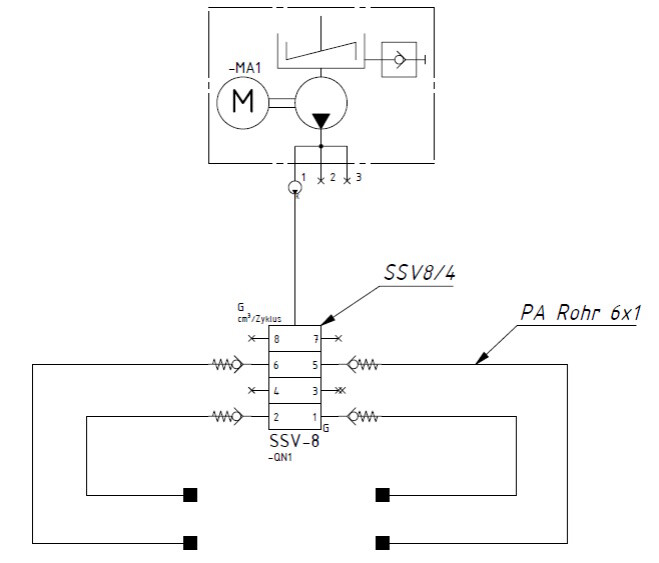
Calculation and drawings of bearing units - determining loads and selecting supports, seals and lubrication schemes for stable operation of the unit. In such tasks IRBIS helps not only with the calculation but also with selecting bearings and bearing units for specific operating conditions.
Lubrication scheme
-
Calculation of belt drives - checking the drive configuration, pulley parameters, tension and operating mode for correct torque transmission.
Drive comparison

-
Calculation and selection of chain drives - determining system parameters taking into account load, speed and operating conditions. If needed, IRBIS selects drive chains for standard and reinforced solutions.
-
Calculation and selection of couplings - working out shaft connection parameters, misalignment compensation and drive protection. Projects use flexible and freewheel couplings depending on the task.
-
Selection and calculation of gear motors (0.06-1300 kW) - determining power, gear ratio, operating mode and load margin. In such tasks IRBIS helps select gear motors for specific operating conditions and service life requirements.
-
Selection of frequency converters - matching the electric drive to starting modes, speed control and operating conditions.
-
Design of drive systems - comprehensive development of a system consisting of a motor, gearbox, couplings, transmissions, support units and other functional elements.
-
Design and calculation of belt conveyors and bucket elevators - selecting belts, drums, drives, tensioning units and other components. These solutions may use conveyor and elevator belts.
-
Technical solutions to raise equipment productivity - eliminating bottlenecks, checking overloaded sections and optimizing mechanical systems without unnecessary costs.
Stages of ordering engineering and calculation of mechanical systems
-
Initial contact. You describe the task, the equipment, the operating mode and existing technical constraints.
-
Collecting initial data. We analyze drawings, photos, load parameters, speeds, the operating environment and the actual condition of the units.
-
Engineering analysis. Mechanical units are calculated, the system is checked, options are compared and a technical solution is selected.
-
Preparing a proposal. The customer receives a list of recommended components, a description of the solutions, technical explanations and, if needed, drawings.
-
Support during implementation. IRBIS provides advice on purchasing, installation, setup and subsequent operation.
Why order engineering and calculation of mechanical systems from IRBIS
-
Many years of experience working with enterprises in different sectors of the Ukrainian economy.
-
A practical approach, from analyzing the problem to a technically grounded solution.
-
A focus on service life, trouble-free operation, efficiency and cost control.
-
The ability to select optimal components by price, quality and availability.
What you get after engineering and calculation
-
units and drives correctly selected for real operating conditions;
-
a lower risk of premature wear, overload and emergency failures;
-
a basis for modernization, replacement of components or launch of a new technical solution.
Mechanical systems for which engineering is performed
IRBIS performs engineering calculations of mechanisms for drive systems, conveyors, bucket elevators and other production solutions that include bearing units, belt and chain drives, gear motors, couplings and other functional elements.
Special attention is given to systems that already show noise, vibration, overheating, unstable operation or premature failure of individual units. In such cases, engineering of mechanical systems makes it possible not only to select the components correctly but also to coordinate their work across the whole system.
The service is also useful when an enterprise needs mechanical units designed for new equipment, modernization of an existing drive system, or a check that technical decisions already made are correct. This is especially important when service life, productivity and budget need to be balanced.
Methods for calculating and designing mechanical systems
IRBIS uses a comprehensive approach that takes into account the geometry of the unit, working loads, speed modes, lubrication conditions, the operating environment and reliability requirements.
-
analysis of technical condition and initial parameters;
-
engineering calculation of mechanical systems and checking of loads;
-
calculation of mechanical units and selection of components;
-
checking the compatibility of units within the system;
-
selection of alternative products when the original is not available;
-
preparation of recommendations for installation and subsequent operation.
This approach makes it possible not just to choose individual parts but to build a workable system with a predictable service life, stable operation and an economically justified set of components.
Which tasks engineering of mechanical systems solves
Engineering of mechanical systems helps an enterprise remove technical uncertainty when designing or modernizing drive systems, and avoid mistakes that lead to overloads, downtime and premature wear of individual units.
Thanks to engineering support, the enterprise gets not a formal selection of individual parts but a well-grounded technical solution for the whole mechanical system.
Results of engineering and calculation of mechanical systems
The result of the work is an agreed technical solution in which all the elements of the system are selected taking into account the operating mode, loads, availability of components and the enterprise's requirements. The customer gets a clear plan of action for purchasing, replacing or implementing units.
Engineering calculation of mechanical systems reduces the risk of technical errors, raises equipment reliability and lowers operating costs. As a result, the enterprise gets an optimization of its mechanical systems that has a positive effect on the productivity, safety and stability of the production process.
Benefits of engineering and calculation of mechanical systems for an enterprise
For an enterprise, engineering is a tool for reducing technical risks and managing equipment service life more precisely.
-
fewer emergency stops and repeated failures;
-
more precise selection of units and components;
-
savings in the budget for replacements and repairs;
-
better coordination between the elements of the system;
-
higher safety and predictability of operation.
That is why engineering calculations of mechanical systems and mechanisms, and the design of mechanical units, are best carried out before purchasing, modernizing or launching new equipment, not after problems appear in operation.
Order engineering and calculation of mechanical systems from IRBIS
If your enterprise needs calculation of mechanical units, a check that the selection of transmissions, couplings or drives is correct, or the development of a technical solution for new or existing equipment, contact TD "IRBIS" LLC. Our engineers will help collect initial data, determine the key constraints and prepare a well-grounded technical proposal.
FAQ
What is engineering of mechanical systems?
It is a set of technical work that includes analysis of initial data, engineering calculation of a mechanical system, selection and coordination of individual units, and preparation of technical solutions for stable, safe and efficient operation of the equipment.
How long do engineering and calculation of mechanical systems take?
The time depends on the complexity of the task, the number of units, the completeness of the initial data and whether a visit to the enterprise is needed. Simple tasks are handled faster, while complex projects need a separately agreed plan.
Which mechanical systems can be designed during engineering?
Most often these are drive systems, conveyors, bucket elevators and other mechanisms for which individual units need to be correctly selected or designed: bearing supports, belt and chain drives, gear motors, flexible and freewheel couplings.
When does an enterprise need engineering of mechanical systems?
The service is needed when equipment runs unstably, units wear quickly, productivity needs to be raised, obsolete components need replacing, or a technically correct solution for modernization needs to be prepared.
Which enterprises are engineering services for mechanical systems relevant for?
The service is relevant for manufacturing, agricultural, logistics, processing, engineering and other enterprises where continuity of processes, equipment reliability, the service life of units and control of operating costs matter.